
Ragi, Kambu, Thinai and Varagu: Are Millets Better for Weight Loss?
Millets are a real upgrade over polished rice, but they are not free calories. What each one offers, how much to eat, and who should go easy.
BroTin Box Nutrition Team, Measured meals, Coimbatore · 22 October 2026 · 5 min read
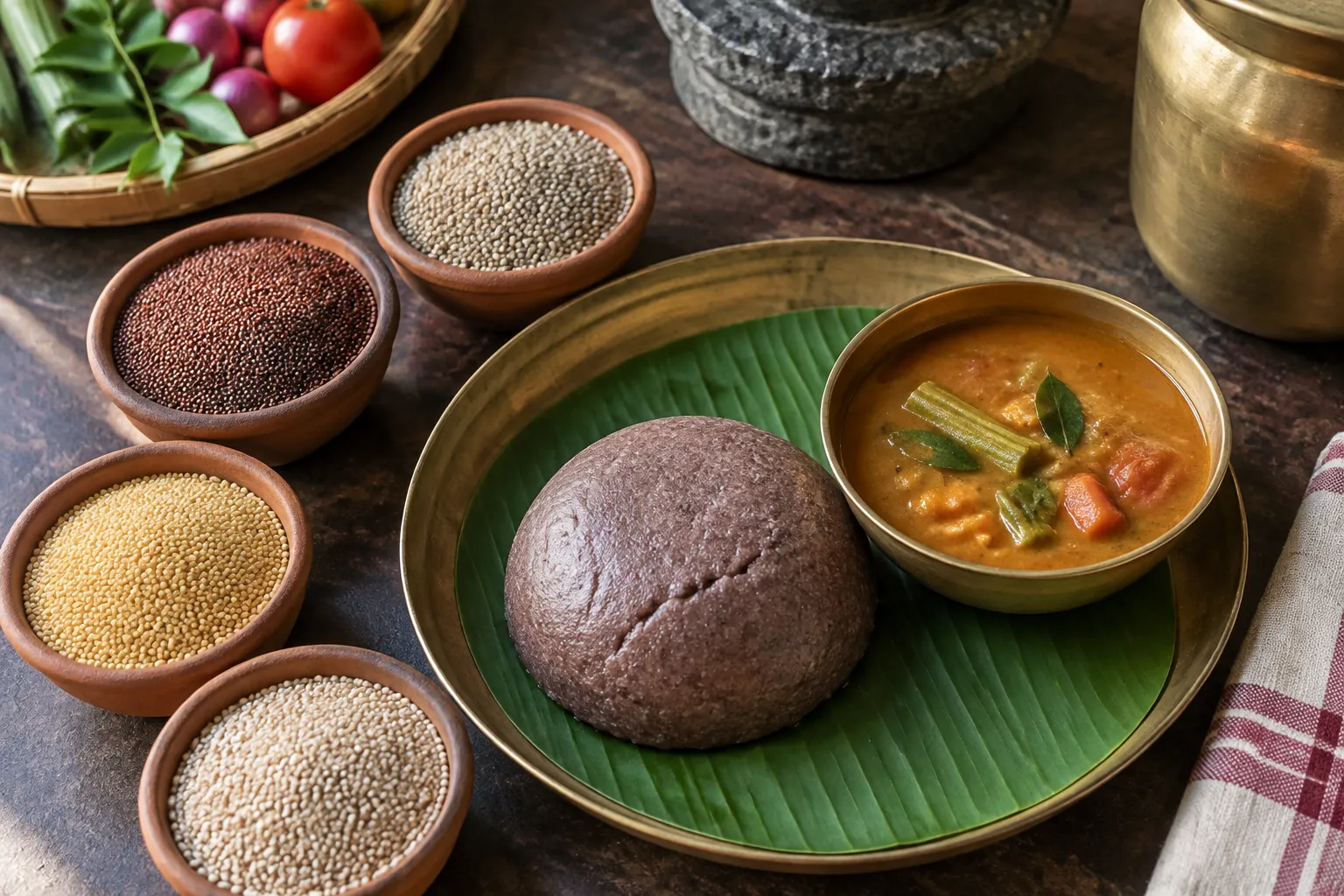
Quick answer: Millets can help with weight loss because many of them have more fibre than polished rice and can keep you fuller. They are not low in calories, though: dry millets have about the same calories as dry rice. Use them to add variety and nutrients, keep the portion the same as you would for rice, and always add protein.
Tamil Nadu ate millets long before they became fashionable. Kambu koozh, ragi kali and thinai payasam are old foods, and they are back on the shelf with a health label and a higher price.
So are they really better than rice for weight loss? Yes, in some ways, and no, not by magic.
The common Tamil Nadu millets
Ragi (kezhvaragu, finger millet)
Ragi is best known for calcium, with about 350 mg per 100 g of dry grain, far more than rice or wheat. It also offers useful fibre. Its protein is on the lower side among millets. Try it as ragi dosa, kali, idiyappam or a thin porridge.
Kambu (pearl millet)
Kambu is one of the more protein-rich common millets and is a good source of iron. It suits koozh, dosa and adai. It has a stronger flavour, so mix it with other grains if you are new to it.
Thinai (foxtail millet)
Thinai cooks up light and fluffy, so it is an easy replacement for rice in pongal or lemon rice. It has a mild taste and works well for beginners.
Varagu (kodo millet)
Varagu has a mild, slightly nutty taste, and it works well in upma, pongal and khichdi. Like thinai, it is an easy swap for rice.
Samai (little millet) and kuthiraivali (barnyard millet)
These small grains cook quickly and can stand in for rice at lunch or breakfast. They are good options when you want variety in your week.
As a rough guide, dry millets provide about 7–12 g of protein per 100 g. The exact figures vary by variety and source, so treat any single number online as an estimate.
Millets vs rice: an honest comparison
Calories: About the same as rice, at roughly 320–360 kcal per 100 g dry. A big plate of millet pongal with ghee is still a big plate.
Fibre: Often higher than polished white rice, especially for whole grains. This is the main advantage for weight loss, because fibre helps you stay full.
Minerals: Often better, such as calcium in ragi and iron in kambu.
Protein: Often somewhat higher than white rice, but still not enough for a meal on its own. You still need dal, eggs, fish, chicken, paneer or soya.
Blood sugar: This depends on the millet, how it is processed, and how it is cooked. Fine flour and thin porridges can digest quickly. If you have diabetes, do not assume every millet product is safe in any amount, and check your own response with your doctor's guidance.
The biggest millet mistakes
1. Thinking "healthy" means unlimited
Three helpings of ragi kali is still three helpings. Keep the same portion you would use for rice: about 1 cup cooked to start with.
2. Forgetting the protein
A millet dosa with coconut chutney is mostly carbs and fat. Add eggs, a thick sambar with extra dal, or sundal on the side.
3. Buying "millet" snacks and assuming they are healthy
Millet cookies, chips and noodles can be mostly refined flour, oil and sugar with a little millet added. Use our guide to reading nutrition labels before you buy them.
4. Going all in overnight
A sudden jump in fibre can cause bloating. Start with one millet meal a day and drink enough water. Our high-fibre foods guide explains how to build up slowly.
How to cook millets well
- Rinse them well, until the water runs fairly clear.
- Soak them for a few hours if you can. Many people find that this improves texture and digestion.
- Use about 2 to 2.5 parts water to 1 part millet for a fluffy grain, then adjust for your variety and cooker.
- Let it rest with the lid closed for 5 minutes before you fluff it.
Who should be careful?
Millets are a healthy food for most people, but do talk to your doctor or dietitian about large amounts if you have a thyroid condition, kidney disease or a history of kidney stones. You do not have to fear them. Variety is simply the sensible approach: rotate your grains instead of eating one millet at every meal.
Do you have to replace rice completely?
No. If you enjoy rice, keep it. Read our guide on how to eat rice and still lose weight. A simple pattern that works well for many people is one millet meal a day, with rice or chapati at the others.
Frequently asked questions
Which millet is best for weight loss? There is no single winner. Choose the one you enjoy and can eat regularly, and keep the portion measured. Thinai and varagu are easy places to start.
Can I eat millets every day? Most healthy people can, particularly if they rotate between different types. If you have a medical condition, follow the advice of your doctor.
Is ragi good for diabetics? Whole ragi can be a useful part of a diabetic diet, but thin ragi porridge may raise blood sugar quickly. Portion and preparation matter, so ask your care team and check your readings.
Are millets gluten-free? Whole millets do not naturally contain gluten, but they can be mixed with wheat during processing or cooking. If you have coeliac disease, look for products certified as gluten-free.
We build our boxes around measured portions, with a protein main, eggs or curd, legumes, salad and a carb. See what is on the menu.