How to Read a Nutrition Label in India: 6 Tricks Food Brands Rely On
"Multigrain", "no added sugar" and "high protein" may not mean what you think. A 60-second routine for reading any food label in India.
BroTin Box Nutrition Team, Measured meals, Coimbatore · 20 October 2026 · 5 min read
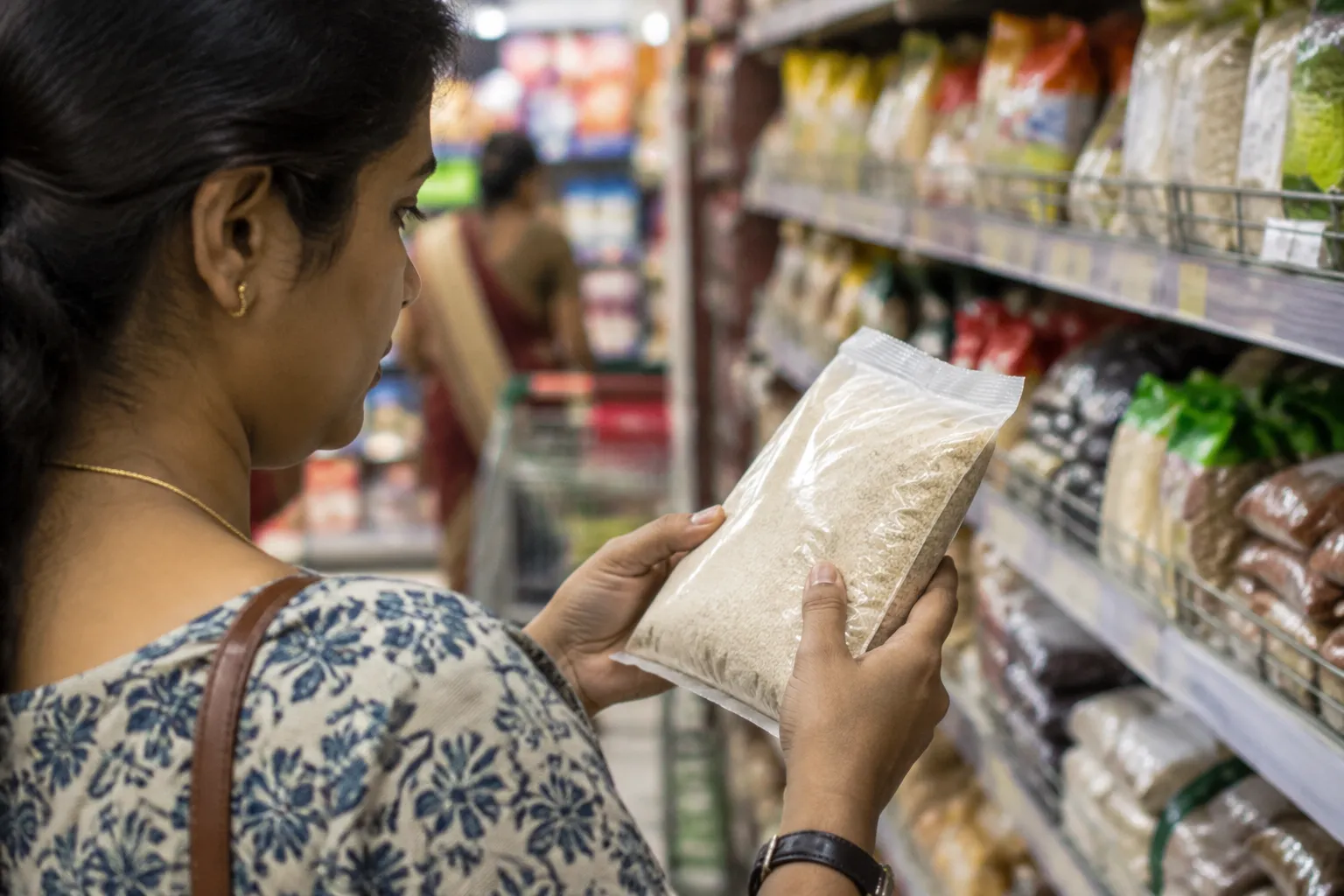
Quick answer: Read the back of the pack, not the front. Check the numbers per 100 g so you can compare products fairly, read the first three ingredients, look for added sugar and sodium, and treat words like "multigrain", "natural" and "light" as marketing until the numbers prove otherwise.
The front of a food packet is an advertisement. The back is where the facts live. Most packaged foods sold in India carry a nutrition panel under FSSAI rules, and once you know how to read it, you can judge almost any product in about a minute.
Here is what to look at, and six tricks that catch people out.
The 60-second label routine
- Find the per 100 g column. This is the only fair way to compare two products.
- Read the first three ingredients. Ingredients are listed from the largest quantity to the smallest.
- Check added sugar. The daily reference used on Indian labels is 50 g, and less is better.
- Check sodium. The reference is 2,000 mg a day, which equals about 5 g of salt.
- Check protein against calories. If you want a filling snack, this ratio tells you more than any claim on the front.
6 tricks to watch for
1. The tiny serving size
A packet of chips or biscuits may list a serving of 20 or 30 g, while the pack holds several times that. The per-serve numbers look harmless because almost nobody stops at one serving.
What to do: Multiply. If a 30 g serving has 160 kcal and you will eat the whole 90 g pack, that is about 480 kcal.
2. "Multigrain" and "whole wheat" on a refined product
"Multigrain" only means more than one grain is present. It says nothing about how much, or whether those grains are whole. A multigrain biscuit can still be mostly refined flour.
What to do: Read the first ingredient. Refined wheat flour is often listed as maida. If it comes first, the product is mainly refined flour, whatever the front says.
3. Sugar under other names
A product can list sugar in several forms, each smaller than the last, so that "sugar" does not appear first. Look for:
- Glucose, fructose, dextrose or maltose
- Liquid glucose or invert syrup
- Corn syrup or malt extract
- Jaggery, honey or fruit juice concentrate
Jaggery and honey sound healthier, but they are still sugars and count towards your calories.
4. "No added sugar" that is still very sweet
"No added sugar" does not mean low in sugar. Juices, dates-based bars and dried fruit snacks can be high in natural sugars. Check the total sugars line as well as the added sugars line.
5. "High protein" on a high-calorie product
Some protein bars and cookies carry a big protein number and just as big a calorie count. Compare using this rule of thumb: for a snack that is meant to help with fat loss, look for at least 10 g of protein per 100 kcal. Few packaged snacks reach it. Two boiled eggs give about 12.5 g of protein in 140 kcal, which is a useful benchmark.
6. "Baked", "light" and "natural"
These words describe a process or a feeling, not a result. A baked snack can still have more calories per 100 g than you would expect, because it may contain plenty of fat and starch. Always compare the numbers with the product it claims to be better than.
What a good label looks like
There is no single perfect label, but these are good signs for everyday foods:
- A short ingredient list with foods you recognise
- Little or no added sugar
- Trans fat at or near zero
- Sodium that fits the product (a savoury snack will have more than plain oats, but compare brands)
- A whole food as the first ingredient
Use these as a guide rather than a pass or fail. A sweet you eat once a week does not need to be perfect. The foods you eat every day do.
What about food with no label?
Restaurant meals and most tiffin services have no label at all, which makes them harder to judge than a packet. A single spoon of oil can add about 120 kcal that nobody tells you about, as we explain in our South Indian calorie guide.
That is why we list calories, protein, carbs and fat for each box on our menu, along with allergens. Our numbers come from weighed portions, and you should expect a natural variance of about ±5–8%.
Frequently asked questions
Is per-serving information useless? No. It is helpful once you know your real portion. Just use per 100 g to compare products, then per serve to estimate what you actually ate.
How much added sugar is too much? The reference on Indian labels is 50 g a day, and the World Health Organization advises keeping free sugars below 10% of your energy intake. For someone eating 2,000 kcal, that is the same 50 g, and less is better.
Is the green dot a sign that a food is healthy? No. The green dot means the product is vegetarian. It says nothing about nutrition.
Can I trust every label? Labels are regulated, but errors do happen. A well-known 2024 test of protein powders in India found that many did not match their label, which we cover in our protein powder guide. Whole foods are the simplest way to avoid the problem.
Want meals with the numbers already worked out? See what is on the menu, or try one box for tomorrow.