
High-Fibre Indian Foods: How to Reach 25–30 g a Day
Everyone counts protein and almost nobody counts fibre. The best Indian sources with grams per serving, and a simple 30 g day.
BroTin Box Nutrition Team, Measured meals, Coimbatore · 27 October 2026 · 5 min read
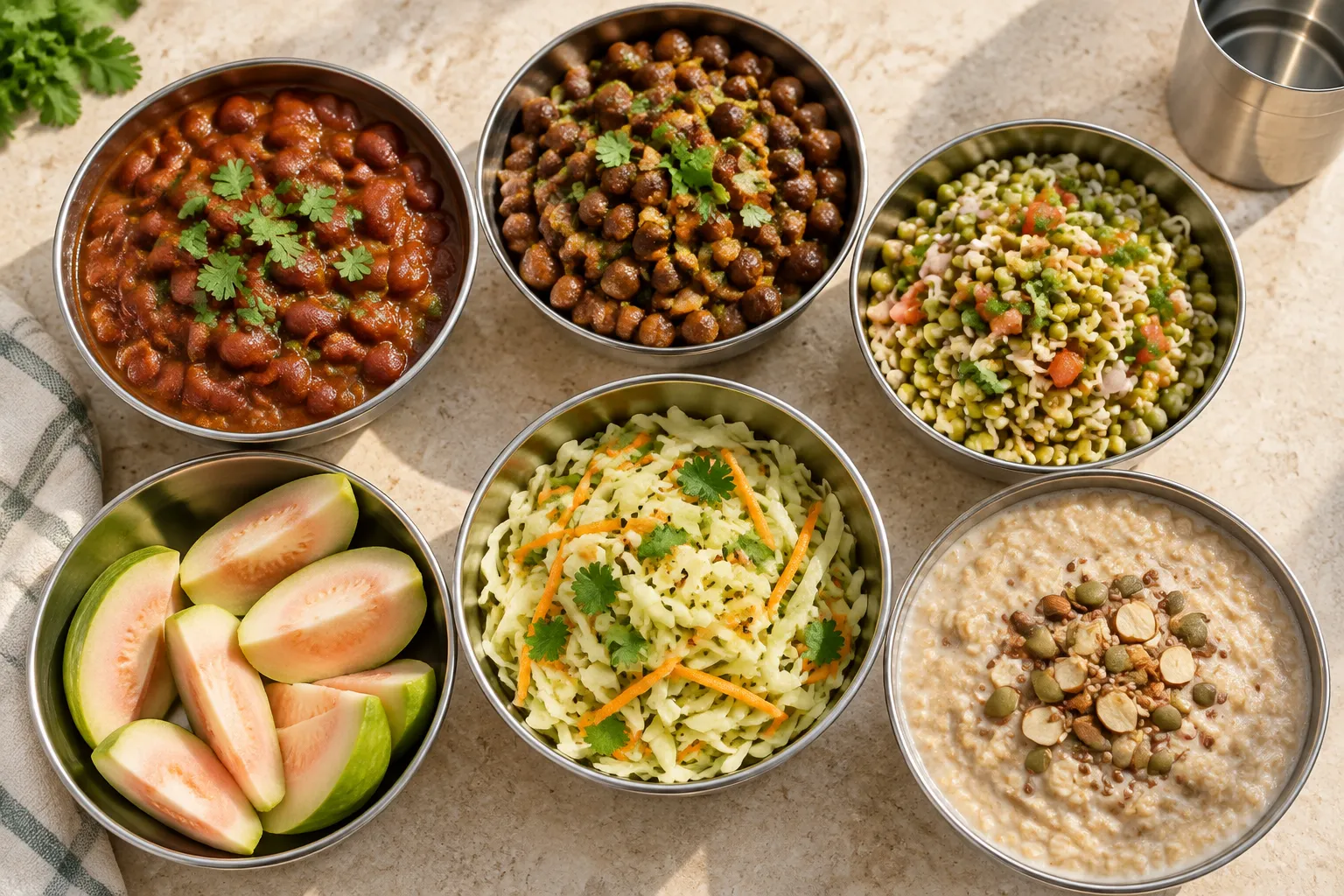
Quick answer: Most adults should aim for about 25–30 g of fibre a day. The easiest Indian sources are legumes such as rajma, chana, kollu and green gram (about 7–8 g per 100 g), whole grains such as oats and chapati, and fruit and vegetables like guava and cabbage. Add it slowly and drink more water, or you may feel bloated.
Everyone seems to be counting protein these days. Hardly anyone counts fibre, even though it helps with fullness, digestion, cholesterol and blood sugar control.
The good news is that traditional South Indian food makes it easy to get enough, as long as your plate is not mostly white rice and parotta.
Why fibre matters
- Keeps you full: High-fibre foods take longer to chew and digest, which can help with weight loss.
- Supports digestion: Fibre helps keep bowel movements regular.
- Helps with cholesterol: Soluble fibre, found in oats and legumes, can help lower LDL cholesterol.
- Slows the blood sugar rise: Fibre with a meal can soften the spike from carbs.
- Feeds your gut bacteria: Many fibres feed helpful bacteria in the large intestine.
The best high-fibre Indian foods
These are approximate. Figures for legumes are for ready-to-eat, cooked or sprouted food.
Legumes (your best bet)
- Sprouted horse gram (kollu), 100 g: about 8 g
- Boiled black chana, 100 g: about 7.5 g
- Sprouted green gram, 100 g: about 7 g
- Boiled rajma, 100 g: about 7 g
- Boiled green peas, 100 g: about 5.5 g
- Soya chunks, 30 g dry: about 4 g
Legumes also bring protein, so they do two jobs at once. Learn more about kollu.
Whole grains
- Oats, 50 g dry: about 5 g
- Chapati, 2 pieces (whole wheat): about 4–5 g
- Ragi and other whole millets: often higher than polished rice, as we explain in our millet guide
- White rice, 1 cup cooked: less than 1 g
Fruit
- Guava, 1 medium: about 5 g
- Apple with skin, 1 medium: about 4 g
- Pear, 1 medium: about 5 g
- Banana, 1 medium: about 3 g
- Papaya, 1 cup: about 2.5 g
Eat the whole fruit. Juice removes most of the fibre, and it makes it easy to take in more sugar.
Vegetables
- Broccoli, 100 g cooked: about 3 g
- Carrot, 100 g: about 3 g
- Beans or drumstick poriyal, 1 cup: about 3–4 g
- Cabbage, 100 g: about 2.5 g
- Spinach or keerai, 1 cup cooked: about 3–4 g
Nuts and seeds
- Chia seeds, 1 tablespoon: about 4 g
- Flaxseed, 1 tablespoon ground: about 2 g
- Almonds, about 10: about 1.5 g
- Peanuts, 30 g: about 2.5 g
These are also high in calories, so measure them if you are trying to lose weight.
A sample 30 g fibre day
- Breakfast: oats made with 50 g dry oats, and a guava (about 10 g)
- Lunch: 2 chapatis, 100 g rajma, and a vegetable salad (about 15 g)
- Snack: a cup of tea and 50 g of chana sundal (about 4 g)
- Dinner: grilled fish or tofu, cabbage poriyal, and a small serving of rice (about 3 g)
Total: about 32 g. You can reach this with normal food, and without a single supplement.
How to add fibre without bloating
Go slowly
Increasing your fibre very quickly can cause gas and discomfort. Add one high-fibre food every few days over 2–3 weeks.
Drink more water
Fibre needs fluid to work well. Without enough water, more fibre can make constipation worse.
Soak and cook legumes well
Soak dried legumes for 8 hours or more, discard the water, and cook them until soft. Many people find sprouted legumes easier to digest.
Chew well and move
Eating slowly and walking after meals can also help.
Who should be careful?
Speak to your doctor or dietitian before you make big changes if you have irritable bowel syndrome (IBS), inflammatory bowel disease, kidney disease, or a history of bowel obstruction, or if you have recently had gut surgery. Fibre supplements can also affect how some medicines are absorbed, so ask your doctor or pharmacist about timing.
How do BroTin Box meals fit in?
Our meals include a legume and a salad, both counted and weighed. Across our catalogue, legume servings provide about 4–8 g of fibre, salads about 2.5–4.5 g, and carbs (chapati, oats or oats dosa) about 4.5–6 g. If you have a food allergy, check the allergens listed for each box on our menu before you order.
Frequently asked questions
How much fibre do I need per day? A common recommendation is about 25–30 g for adults. Many people eat well below that, so start by adding one more serving of legumes or fruit each day.
Do fibre supplements work as well as food? They can help some people, particularly with constipation, but whole foods also bring vitamins, minerals and other useful plant compounds. Start with food unless your doctor advises otherwise.
Can too much fibre be a problem? Yes. Too much too quickly can cause bloating, cramps or loose stools. Increase it slowly and listen to your body.
Does fibre help with weight loss? It can, mainly by keeping you full. It works best with enough protein and a sensible calorie target. See our calorie deficit guide.
A measured legume and salad in every box means you do not have to plan your fibre. See the menu, or try a box for tomorrow.