Calories in South Indian Food: Idli, Dosa, Pongal, Parotta, Biryani and More
Idli is light, parotta is not. A practical calorie guide to 40+ South Indian dishes, and why the same dish can vary by 300 calories.
BroTin Box Nutrition Team, Measured meals, Coimbatore · 13 October 2026 · 5 min read
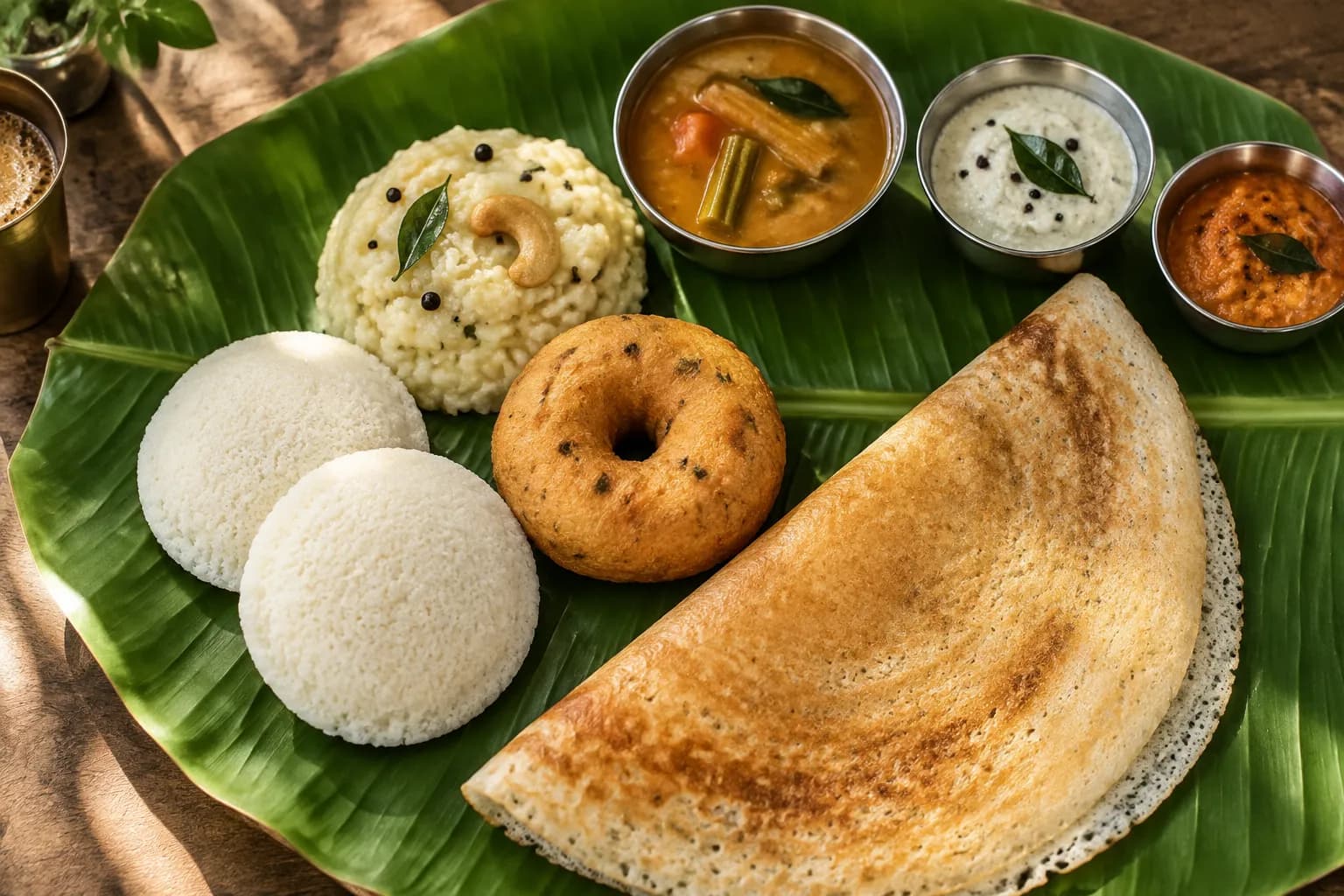
Quick answer: One medium idli has about 55–65 kcal, a plain dosa 120–170 kcal, a masala dosa 250–350 kcal, one parotta 250–320 kcal, a cup of ven pongal 280–350 kcal, and a restaurant plate of chicken biryani 600–900 kcal. The biggest swing in every dish comes from oil and ghee: each tablespoon adds about 120 kcal.
South Indian food has a reputation for being light. Some of it is: idli, rasam and sundal are genuinely low in calories. Some of it is not: parotta, ghee roast, biryani and anything deep-fried can quietly add up to a full day's calories in one meal.
Use this guide to estimate what you eat. All numbers are approximate. They change with portion size, recipe, and especially how much oil or ghee goes in.
Breakfast and tiffin items
- Idli (1 medium, about 40 g): 55–65 kcal, about 2 g protein
- Plain dosa (1 medium): 120–170 kcal, about 3 g protein
- Masala dosa (1): 250–350 kcal
- Ghee roast dosa (1): 300–400 kcal
- Rava dosa (1): 150–220 kcal
- Ragi dosa (1): 100–130 kcal
- Pesarattu, green gram dosa (1): 130–170 kcal, about 6–8 g protein
- Uttapam (1): 180–250 kcal
- Medu vada (1): 130–160 kcal (deep-fried)
- Ven pongal (1 cup, about 200 g): 280–350 kcal
- Rava upma (1 cup): 220–280 kcal
- Appam (1): 100–130 kcal
- Idiyappam (2 pieces): 120–150 kcal
- Puttu (1 cup): about 200 kcal
- Poori (1): 100–130 kcal
Accompaniments
- Sambar (1 cup): 90–150 kcal
- Coconut chutney (2 tablespoons): 60–90 kcal
- Tomato or onion chutney (2 tablespoons): 40–70 kcal
- Rasam (1 cup): 40–70 kcal
- Gunpowder (podi) with oil (1 tablespoon + oil): 80–150 kcal
Notice how quickly chutney and podi add up. Three idlis are about 180 kcal. Add two servings of coconut chutney and podi with oil and the plate can cross 400 kcal.
Rice and meals
- Plain white rice (1 cup cooked, about 150 g): about 200–210 kcal, about 4 g protein
- Curd rice (1 cup): 200–260 kcal
- Lemon rice (1 cup): 250–300 kcal
- Sambar rice (1 cup): 200–260 kcal
- Full South Indian meals (unlimited, typical restaurant): 800–1,200 kcal depending on refills
Non-veg and restaurant favourites
- Chicken biryani (1 restaurant plate): 600–900 kcal
- Chicken 65 (100 g): 250–300 kcal
- Chettinad chicken curry (1 cup): 250–350 kcal
- Fish fry (1 medium piece): 150–250 kcal
- Parotta (1): 250–320 kcal
- Kothu parotta (1 plate): 600–800 kcal
- Egg curry (2 eggs with gravy): 250–350 kcal
Snacks and drinks
- Filter coffee with milk and sugar (1 tumbler): 70–110 kcal
- Chana sundal (1 cup): about 200 kcal, about 10 g protein
- Banana bajji (1): 120–150 kcal
- Murukku (2 medium): 150–200 kcal
- Buttermilk (1 glass, unsweetened): 30–50 kcal
Why the same dish can vary by 300 calories
Two plates of ven pongal can look the same and differ hugely. The reasons:
- Oil and ghee. One tablespoon of oil is about 120 kcal. One tablespoon of ghee is about 115–120 kcal. Restaurants often use two or three times what a home kitchen uses.
- Portion size. A "cup" at a hotel can be 150 g or 300 g.
- Batter and stuffing. Masala, cheese, or extra potato change everything.
- Refills. Unlimited meals make tracking almost impossible.
This is why counting calories from a generic chart only gets you close. If your goal is fat loss, being 300 kcal off every day can erase your entire deficit.
Smarter swaps that keep the taste
- Choose pesarattu or ragi dosa over ghee roast for more fibre and protein.
- Ask for chutney on the side and use half.
- Pair idli or dosa with a protein side: boiled eggs, sundal or a small bowl of curd.
- Swap parotta for chapati: two chapatis are about 190 kcal, versus 500+ for two parottas.
- Fill half your plate with vegetables or salad before adding rice.
How we take the guesswork out
Every BroTin Box is built on the same principle: weigh everything, count everything. Each ingredient is weighed on digital scales, and oil is measured, not poured. That is why we can print exact numbers on every box. For example, our Thursday box (boiled smashed chicken, 2 eggs, boiled peanuts, cucumber salad and oats upma) is 839 kcal with 75.9 g protein, and our Saturday grilled mackerel box is 808 kcal with 58.6 g protein.
See every box and its macros on our weekly menu.
Frequently asked questions
Is idli good for weight loss? Idli is low in calories and fat, but also low in protein. On its own it will not keep you full for long. Pair it with a protein source and go easy on the chutney.
Which South Indian breakfast has the most protein? Pesarattu, egg dosa, and anything served with sundal or eggs. See our list of 15 high-protein Indian breakfasts.
How many calories should I eat in a day? It depends on your size, activity and goal. Most moderately active adults maintain weight somewhere between 1,800 and 2,600 kcal. For fat loss, a deficit of 300–500 kcal per day is a sustainable starting point. See our 7-day Indian weight loss meal plan.
Want food where the calories are already counted for you? Try a BroTin Box tomorrow.