
Kollu (Horse Gram) for Weight Loss: What Is Real and What Is Folklore
Our grandmothers swore that kollu melts fat. It does not, but it is still one of the most useful foods for weight loss. Here is why, and how to cook it.
BroTin Box Nutrition Team, Measured meals, Coimbatore · 28 October 2026 · 5 min read
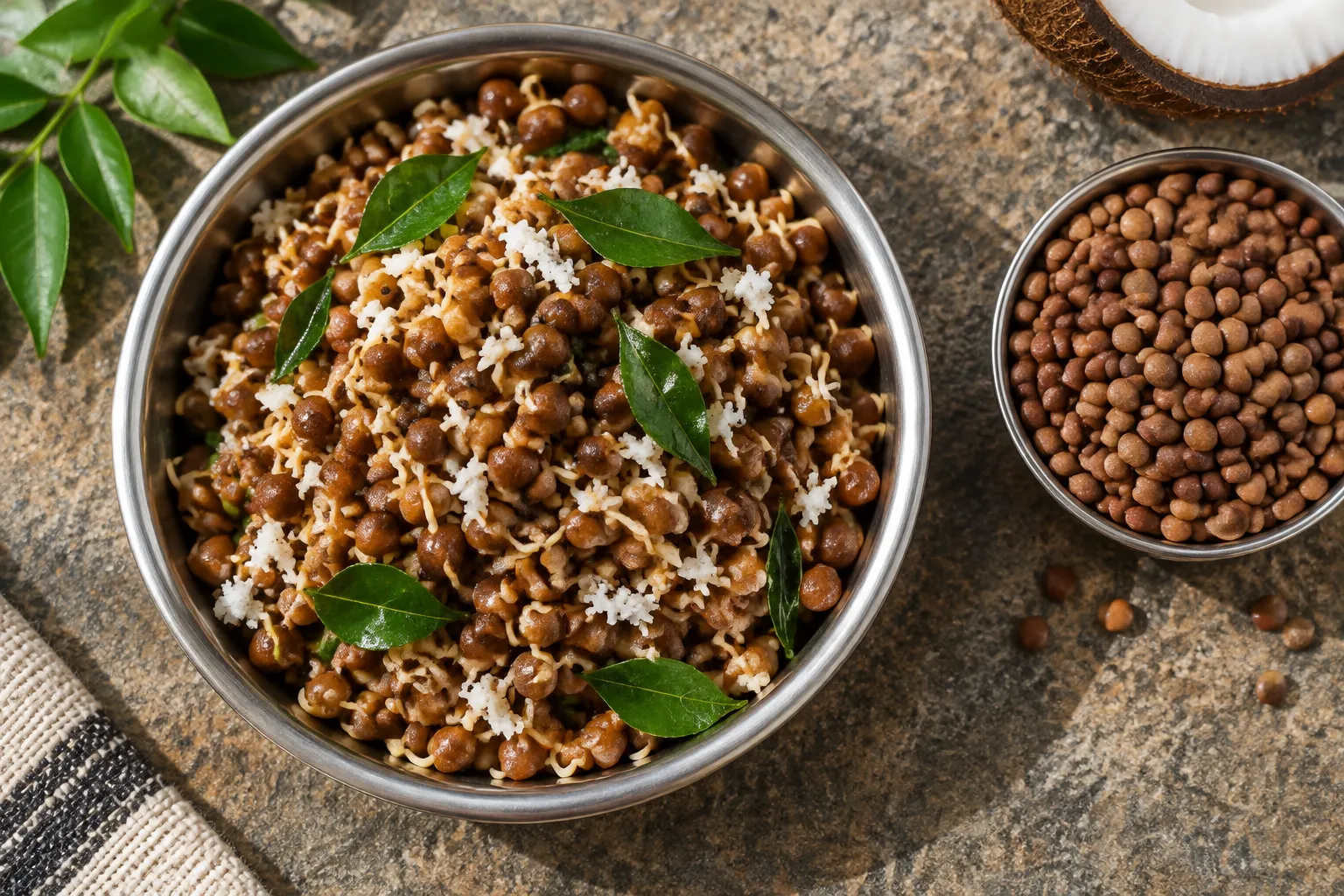
Quick answer: Kollu (horse gram) does not melt fat, despite what you may have heard. It helps with weight loss in a more ordinary way: it is rich in protein and fibre, which keep you full. A 100 g serving of sprouted kollu gives about 135 kcal, 9 g of protein and 8 g of fibre. Eat it as sundal, rasam or thuvaiyal, and cook it well.
There is an old Tamil saying: "Kozhuthavanukku kollu, ilaithavanukku ellu." Roughly, kollu is for those who have put on weight, and sesame is for those who are thin. It has made kollu famous as a weight loss food, and social media has made the claims even bigger.
So what is true, and what is folklore?
What is in kollu?
Dry horse gram provides roughly 320 kcal and 22 g of protein per 100 g, with a good amount of fibre, iron and calcium. Exact figures vary by variety and by source.
Dry weight is not what you eat, though. Soaking, sprouting and cooking add water, so the numbers per spoonful drop. Here are the figures for 100 g of sprouted horse gram as listed in our kitchen catalogue:
- Calories: 135 kcal
- Protein: 9 g
- Carbs: 21 g
- Fat: 1.5 g
- Fibre: 8 g
Few foods offer that much fibre for so few calories, alongside useful protein.
Claims about kollu: fact or folklore?
"Kollu burns fat"
Folklore. No food burns body fat by itself. Lab and animal research on horse gram exists, but that is not the same as proof in people. Kollu helps because fibre and protein make a meal more filling, so eating less becomes easier. You still need a calorie deficit.
"Kollu water makes you thin"
Not supported. Most of the fibre and protein stay in the seeds, so the water is not doing the work. Some people enjoy it, and it does not need to be avoided, but it will not replace eating well.
"Kollu cures kidney stones"
Not proven. Do not rely on it. This is a popular traditional belief, and it has attracted some research interest, but there is not enough good human evidence to use it as a treatment. If you have kidney stones or kidney disease, talk to your doctor before eating large amounts of any legume.
"Kollu is a good protein source"
True, with a caveat. Kollu is a useful plant protein, but 100 g of sprouted kollu has far less protein than 100 g of cooked chicken. For most people, it is best used as part of a meal, alongside other protein foods. See our protein source comparison.
"Kollu helps with blood sugar"
Plausible, but it is not a treatment. High-fibre legumes generally digest slowly, and that can help keep blood sugar steadier than refined grains do. If you have diabetes, keep following your care plan and check how you respond.
How to eat kollu
Sprouted kollu sundal
Soak the dry kollu overnight, drain it, and leave it in a damp cloth or covered bowl until it sprouts. Rinse the sprouts and cook them well. Temper with mustard seeds, curry leaves and green chilli, then add a little grated coconut and lemon.
Kollu rasam
Pressure cook soaked kollu and use the cooking water and a little of the mashed gram in a pepper and garlic rasam. It is a classic for cool or rainy days. Eat the gram too, or you will miss most of the protein and fibre.
Kollu thuvaiyal
Dry roast the kollu with red chillies, garlic and a little coconut, then grind it with tamarind. Keep the portion small, and enjoy it with rice or idli.
Kollu dosa or adai
Soak kollu with rice or other lentils, then grind into a batter. Your dosa gets a bit more protein and fibre than a plain one.
Cooking tips
Kollu is a very hard legume, so it needs some patience.
- Soak for at least 8 hours, and then throw away the soaking water.
- Pressure cook it well, usually for 5–6 whistles or more, until it is soft.
- Try sprouting, which many people find makes it easier to digest.
Undercooked legumes are hard on the stomach, and they may not be safe. Cook sprouts properly too, particularly for children, older adults, anyone who is pregnant and people with weak immunity.
Who should be careful?
- Anyone new to high-fibre foods: start with a few spoonfuls, and drink enough water.
- People with kidney stones or kidney disease: ask your doctor first.
- People with gout or irritable bowel syndrome: see what your doctor or dietitian advises, and watch how you feel.
- Anyone who is pregnant: there is a traditional belief that kollu is "heating". Ask your doctor about what suits you.
Kollu is a food, not a medicine. It should never replace treatment that a doctor has prescribed.
How we use kollu
Sprouted horse gram is one of the legumes in our 30-day rotation, alongside black chana, green gram, rajma and green peas. It is weighed at 100 g and listed with the box's macros.
For other high-fibre foods, see our fibre guide.
Frequently asked questions
Can I eat kollu every day? Most healthy people can eat a moderate serving every day, but variety is better. Rotate it with other legumes to get a wider range of nutrients.
Is kollu "heating" for the body? That is a traditional idea from food culture, and it has not been measured in modern nutrition science. If it upsets your stomach, or you feel unwell, eat less of it.
When is the best time to eat kollu? Any time that suits you. Many people prefer it at breakfast or lunch, as a large high-fibre meal late at night can feel heavy.
Does kollu cause gas? It can, as with most legumes. Soaking, sprouting and thorough cooking may help, along with starting with small portions.
Want kollu without the overnight soak? It appears in our rotation, along with other weighed legumes. See the menu.