
Kaanaangeluthi (Mackerel): The Affordable Omega-3 Fish Most Diets Ignore
Mackerel brings serious protein and omega-3 fats at a far friendlier price than most premium fish. Here is how often to eat it and how to cook it lean.
BroTin Box Nutrition Team, Measured meals, Coimbatore · 29 October 2026 · 5 min read
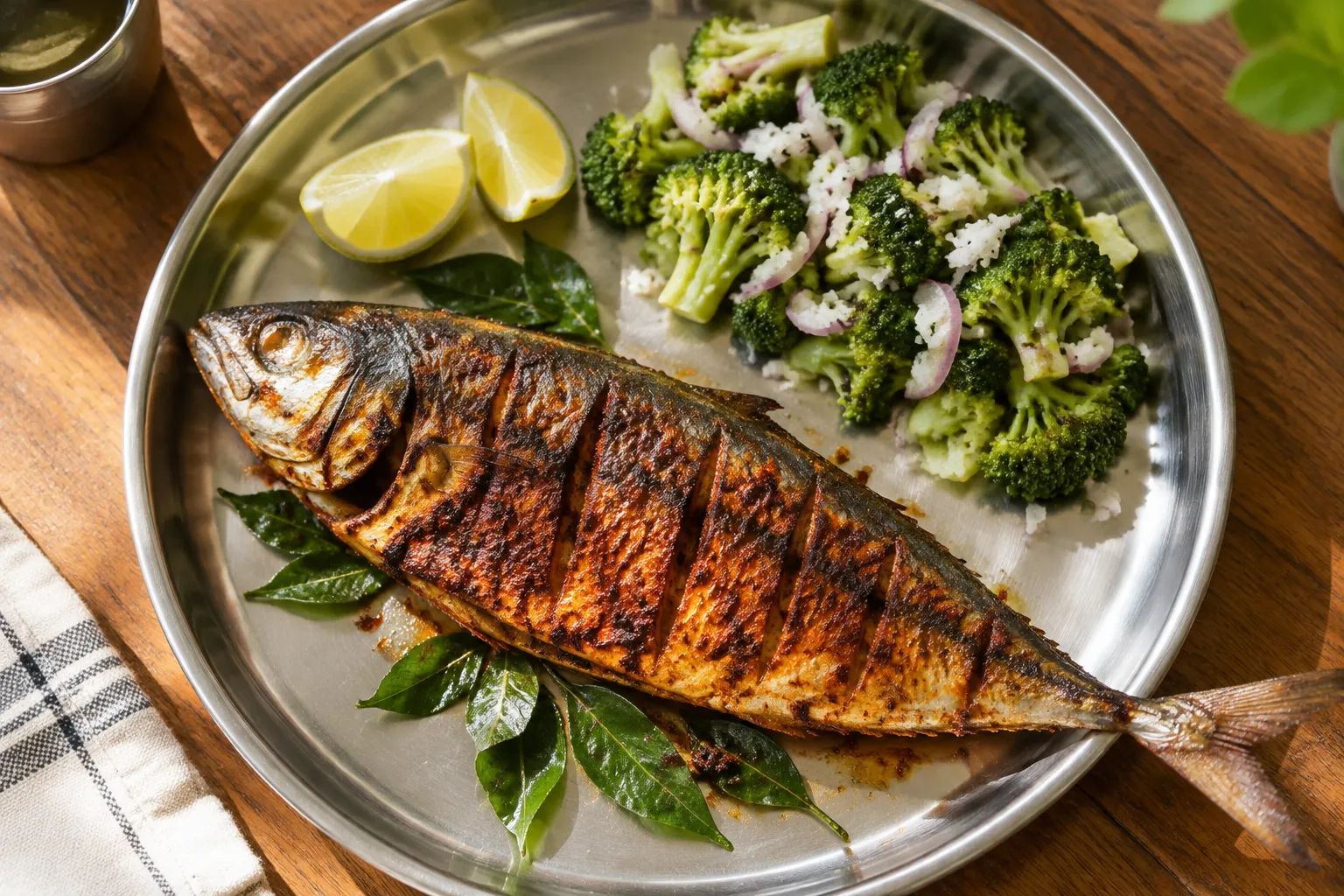
Quick answer: Mackerel (kaanaangeluthi or kana keluthi in Tamil, ayala in Malayalam, bangda in Hindi and Marathi) is an oily fish rich in protein and omega-3 fats, and usually much cheaper than premium fish. A 130 g grilled portion in our kitchen has about 305 kcal and 31.5 g of protein. Aim for around two servings of fish a week, and grill, steam or curry it rather than deep-frying.
When people think of "healthy fish", they often picture imported salmon. In Tamil Nadu, one of the best options has been sitting at the local fish stall all along, usually at a far friendlier price.
Here is why mackerel deserves a regular place on your plate, and how to enjoy it.
What is in mackerel?
The numbers depend on the fish, the season and the recipe. Here is the 130 g grilled mackerel portion from our kitchen catalogue:
- Calories: 305 kcal
- Protein: 31.5 g
- Carbs: 1 g
- Fat: 19.5 g
The higher fat figure is not a problem here. Much of the fat in oily fish is unsaturated, including the omega-3 fats EPA and DHA. Mackerel also provides vitamin B12, vitamin D and selenium.
Why omega-3 matters
EPA and DHA are long-chain omega-3 fats, found mainly in fish and seafood. Your body makes only small amounts of them from plant sources such as flaxseed.
Research has linked regular fish intake with better heart health. Omega-3 fats can also help lower raised triglycerides, though high doses for that purpose should be managed by a doctor. Heart organisations, including the American Heart Association, suggest about two servings of fish a week, particularly oily fish.
The omega-3 content of mackerel varies with the species and the season, and studies report quite different figures. Because of that, we do not quote one exact number here. Oily fish, as a group, are simply among the most reliable food sources.
Is mackerel good for weight loss?
It can be. The protein helps you stay full and protects your muscle while you are in a calorie deficit. Because mackerel is richer than lean fish, however, you should watch the portion and the cooking oil.
As a rough comparison, cooking method can change the calories more than the choice of fish does. A shallow-fried, oil-soaked fish can carry far more calories than the same fish grilled. Read more in our calorie deficit guide.
What about mercury?
Mercury builds up in large, long-lived predatory fish. That is why US FDA advice lists king mackerel among the choices to avoid for pregnant and breastfeeding women and young children. King mackerel is a much larger fish than the small Indian mackerel.
Smaller fish generally carry less mercury, but levels depend on where a fish was caught. To keep things simple:
- Eat a variety of fish, instead of the same one all the time.
- Prefer smaller fish more often than very large ones.
- If you are pregnant, breastfeeding or feeding young children, ask your doctor which local fish and portions suit you best.
How to buy it fresh
Mackerel spoils faster than many fish, and it can form histamine if it is not kept cold. This can cause an allergy-like food poisoning, and cooking does not remove it. So freshness matters.
- Look for bright, clear eyes, shiny skin and red gills.
- Press gently. The flesh should spring back.
- Trust your nose. It should smell like the sea, not sour or strongly "fishy".
- Keep it cold. Put it on ice, or refrigerate it soon after buying, and cook it the same day or freeze it.
Throw away any fish that smells off, or that tastes sharp or peppery. Get medical help if you develop flushing, rash, headache or breathing problems after eating fish.
Lean ways to cook it
Grilled or tawa-roasted
Marinate it with turmeric, chilli, pepper, garlic, salt and lemon. Grill it, or cook it on a tawa with 1–2 teaspoons of measured oil.
Meen kuzhambu
A tangy tamarind curry works beautifully with oily fish. Measure the oil, and go easy on the coconut if you are watching your calories.
Steamed in banana leaf
Wrap the marinated fish in banana leaf, then steam it or roast it lightly. You will need very little oil.
Pair it well
Serve it with a measured portion of rice or chapati, plus a salad or poriyal.
Who should be careful?
- People with a fish allergy should avoid it completely.
- People with gout may need to limit oily fish, so ask your doctor.
- Anyone who takes blood-thinning medication should talk to their doctor before starting high-dose fish oil capsules. Normal food portions are a different matter, but your doctor can advise you.
Do you need fish oil capsules instead?
For most people, eating fish is a better starting point, because you also get protein and other nutrients. Capsules are a separate decision, best made with your doctor if you do not eat fish or have raised triglycerides. If you are vegetarian, flaxseed, chia seeds and walnuts offer a plant omega-3, although your body converts only a small amount into EPA and DHA.
Frequently asked questions
How often should I eat mackerel? Fish twice a week is a common recommendation. Mackerel can be one of those servings, with other fish on other days for variety.
Is mackerel high in cholesterol? Like other fish, it contains some cholesterol, but it is low in saturated fat compared with many fatty meats. Your total diet matters more than any single food.
Is tinned mackerel healthy? It can be convenient, but check the label for sodium and added oil. Our guide on reading labels can help.
Is mackerel better than chicken? They do different jobs. Chicken breast is leaner, while mackerel brings omega-3 fats. Having both in your week is a good plan.
Grilled mackerel is part of our 30-day rotation, weighed and listed with its full macros. See the menu, or check whether we deliver to your area.