
Wedding Season in Tamil Nadu: Enjoy the Virundhu Without Losing Your Progress
One wedding will not undo your progress, but three a month can. What is really on the banana leaf, and seven habits that make wedding season easy.
BroTin Box Nutrition Team, Measured meals, Coimbatore · 2 November 2026 · 6 min read
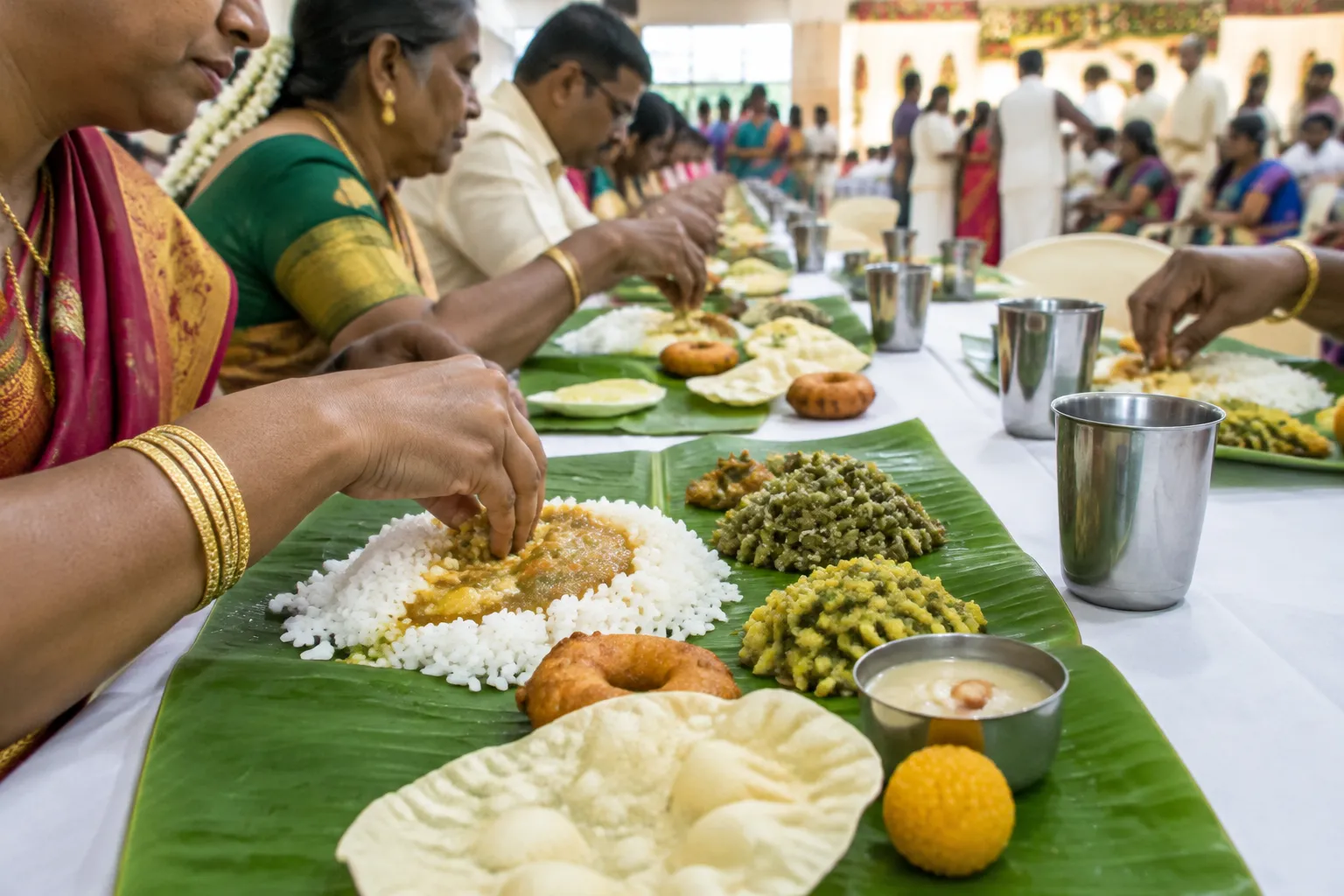
Quick answer: A full wedding virundhu with seconds can easily cross 1,200–1,500 kcal in one sitting, and a reception biryani plate is often 700–1,000 kcal. One wedding will not undo your progress. Three a month, plus the snacks, sweets and late dinners around them, can. Eat a normal protein-rich meal before you go, take rice once, choose one sweet, and go straight back to your usual meals the next day.
November to February is muhurtham season in Tamil Nadu. One weekend it is a cousin's wedding, the next it is a friend's reception, and in between there is a nichayathartham, a valaikappu and a housewarming. Every one of them ends at a banana leaf.
Nobody should skip a wedding meal or sit there counting calories. The goal is simpler: enjoy the food that matters to you, skip the food you are only eating because it is there, and not let a busy season turn into a lost three months.
What is actually on the leaf
A traditional Tamil wedding lunch is not one meal. It is a dozen small ones, served one after another, with someone coming round to refill your leaf before you have finished.
A typical leaf includes:
- Rice with paruppu and ghee, then sambar, then rasam, then curd or moru
- Two or three vegetables: poriyal, kootu, avial or a mor kuzhambu
- Fried items: vadai, appalam, sometimes a bajji or chips
- Sweets: payasam, plus one or two of laddu, jangiri, kesari or halwa
- Small extras: pickle, salt, banana, sweet pachadi
Receptions are different again. Evening receptions in Coimbatore often mean biryani, parotta, a chicken or mutton gravy, ice cream and a paan counter, sometimes with a chaat stall at the entrance.
Rough calories for common wedding food
These are approximate, because every kitchen cooks differently and nobody weighs a wedding serving. Use them to see where the calories are, not as exact numbers.
- Rice, one full serving on the leaf (about 200 g cooked): 250–280 kcal
- Ghee poured over the first rice (1 teaspoon): about 45 kcal
- Medu vadai (1 piece): 130–170 kcal
- Appalam, fried (1 piece): 50–70 kcal
- Payasam (1 small cup, about 150 ml): 200–300 kcal
- Boondi laddu (1 piece): 180–220 kcal
- Jangiri (1 medium): 150–200 kcal
- Reception biryani (1 full plate): 700–1,000 kcal
- Parotta (1 piece): 250–300 kcal
The pattern is clear. The vegetables, sambar, rasam and curd are not the problem. The calories sit in second and third servings of rice, the fried items, the sweets, and the ghee.
To gain 1 kg of actual body fat, you would need to eat roughly 7,700 kcal more than you burn. A single big meal cannot do that. The scale jump you see the next morning is mostly water, salt and food that has not been digested yet. Our Deepavali sweets guide explains this in more detail.
Seven habits that make wedding season easy
1. Do not arrive starving
Skipping breakfast "to save calories for the wedding" usually backfires. You reach the hall at 1 PM very hungry and eat faster than you can notice you are full. Have a normal breakfast with some protein: eggs, a couple of idlis with sambar and a boiled egg, or curd with fruit.
2. Eat the leaf in order, and slow down
Start with the poriyal and kootu while the rice is being served. They are mostly vegetables and lentils, and they take up space. Then eat your rice with sambar. By the time payasam arrives, you will want less of it.
3. Take rice once
This is the single biggest habit. Accept the first serving of rice, then cover your leaf with your hand when the server comes round with more. A second and third serving can add 400–500 kcal without you noticing. If you love the rasam or moru, have it with a small scoop of rice instead of a full one. Our guide to rice and weight loss explains why rice itself is not the enemy; portion size is.
4. Pick one sweet and enjoy it properly
If the payasam is the best part for you, have the payasam and skip the laddu. If it is the jangiri, have that. One sweet eaten slowly is more satisfying than three eaten because they were on the leaf.
5. Choose one fried item
Vadai or appalam, not both, and not seconds. This alone saves 150–250 kcal.
6. At receptions, start with the protein
At a biryani reception, eat the chicken or mutton pieces and the raita first, then decide how much of the rice you want. Leave the extra rice and the oily layer at the bottom of the plate. Skip the parotta if biryani is also on the menu.
7. Walk, and drink water
Weddings involve a lot of sitting. A 15–20 minute walk after a heavy lunch helps your digestion and blunts the rise in blood sugar after the meal. Drink water through the day, because hall food is salty and you will often feel thirsty and tired by evening.
When there are three weddings in one month
One wedding a month is a non-event. The problem is the season as a whole: travel, late nights, snacks at relatives' houses, and the feeling that "this month is already gone, I will restart in February".
A simple rule helps: make every other meal normal. On wedding days, eat a sensible breakfast and dinner. On the days in between, eat exactly as you would in any other week. If you track your weight, compare weekly averages and wait 2–3 days after a wedding before you judge anything.
If you are on a measured meal plan, keep the boxes coming on non-wedding days. With BroTin Box, you can skip or pause any day up to 9:00 PM the night before, and skipped days roll forward instead of being lost. Skip the day of the wedding, and let the next day's lunch or dinner box bring you straight back to normal.
Frequently asked questions
Should I eat less the day after a wedding to make up for it? No. Starving yourself the next day usually leads to overeating later. Go back to your normal meals and your normal activity. The extra water weight will leave on its own within 2–3 days.
Is the wedding lunch healthier than the reception dinner? Usually yes. A traditional lunch has more vegetables, lentils and curd, and the portions are easier to control. Reception menus lean on biryani, parotta and fried starters, which are much denser in calories.
I am diabetic. What should I do at weddings? Follow the advice of your doctor. In general, keep your rice to one serving, start with the vegetables and dal, limit sweets, and take a short walk afterwards. Do not skip any medication you have been prescribed.
How do I refuse food without offending anyone? Cover your leaf with your hand, smile, and say you have eaten well. Praising the food first makes it easier. Most servers move on quickly.
Busy season ahead? See our plans and keep your everyday meals measured, so the weddings are the only meals you need to think about.