
How Much Protein Do You Need Per Day? A Simple Guide for Indians
Most Indian diets fall short on protein. Work out your exact daily number in two minutes and learn how to hit it with everyday Indian food.
BroTin Box Nutrition Team, Measured meals, Coimbatore · 13 October 2026 · 5 min read
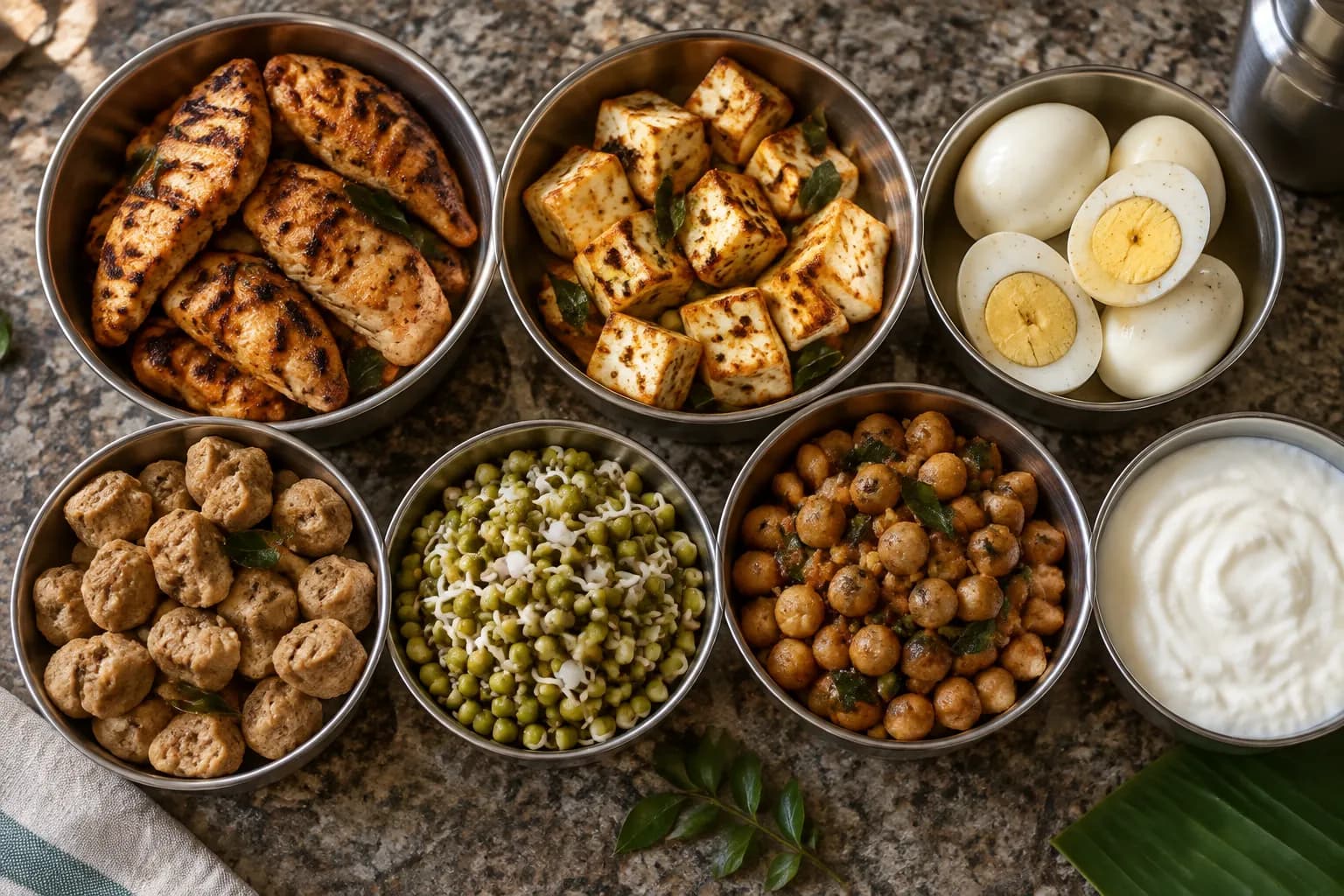
Quick answer: A healthy, inactive adult needs about 0.8 g of protein per kg of body weight per day (ICMR-NIN sets it at 0.83 g/kg). If you train regularly or are trying to lose fat without losing muscle, aim for 1.4–2.0 g per kg. A 70 kg person who goes to the gym should eat roughly 100–140 g of protein a day, spread across 3–4 meals.
Protein is the one nutrient most Indian diets fall short on. A typical day of idli, sambar, rice, rasam and a small portion of dal or curry tastes great, but it often delivers far less protein than an active adult needs. The result: you feel hungry soon after meals, lose muscle when you diet, and recover slowly from workouts.
This guide shows you how to calculate your number and how to reach it with everyday Indian food.
How to calculate your daily protein requirement
Use your current body weight in kilograms and pick the line that matches you:
- Sedentary adult, general health: 0.8–1.0 g per kg
- Walking, yoga or light exercise most days: 1.0–1.2 g per kg
- Adults over 60 (to slow age-related muscle loss): 1.0–1.2 g per kg
- Gym training 3–5 days a week: 1.4–2.0 g per kg
- Losing fat while lifting weights: 1.6–2.2 g per kg (higher protein protects muscle during a calorie deficit)
Worked examples
- 60 kg office worker, mostly sitting: 60 × 0.9 = about 55 g per day
- 70 kg man lifting 4 days a week: 70 × 1.6 = about 112 g per day
- 55 kg woman doing strength training and trying to lose fat: 55 × 1.8 = about 100 g per day
If you carry a lot of extra body fat, calculate using your goal weight instead of your current weight. This avoids an unrealistically high number.
Important: if you have kidney disease, are pregnant, or have been told to limit protein, follow your doctor's advice rather than these general ranges.
Why the total is not enough: spread it across meals
Your body builds and repairs muscle best when each meal carries a meaningful dose of protein. Research suggests roughly 0.3–0.4 g per kg per meal, which works out to 20–40 g per meal for most adults.
This is where the typical Indian day goes wrong. Breakfast is often 6–10 g of protein (two dosas with chutney), lunch is mostly rice, and almost all the protein lands at dinner. Moving 25–30 g of protein into breakfast is one of the easiest improvements you can make. Our article on high-protein Indian breakfasts has 15 practical ideas.
How much protein is in common Indian foods?
Approximate values, which vary with brand and recipe:
- Chicken breast, cooked, 100 g: about 31 g
- 1 whole egg: about 6 g
- Paneer, 100 g: about 18–20 g
- Soya chunks, dry, 50 g: about 26 g
- Fish such as mackerel, cooked, 100 g: about 20–24 g
- Cooked dal, 1 katori (about 150 g): about 7–9 g
- Boiled chana or rajma, 100 g: about 8–9 g
- Curd, 100 g: about 3–4 g (hung curd: about 8–10 g)
- Milk, 1 glass (250 ml): about 8 g
- Peanuts, 30 g: about 7–8 g
- Cooked rice, 1 cup: about 4 g
- 2 idlis: about 4 g
For a deeper comparison of the four most popular sources, read chicken vs eggs vs paneer vs soya.
A sample 110 g protein day with Indian food
- Breakfast (about 30 g): 3-egg bhurji + 1 chapati + 1 glass milk
- Lunch (about 30 g): 100 g grilled chicken or 150 g paneer, 1 katori dal, rice, vegetables
- Snack (about 15 g): chana sundal + buttermilk
- Dinner (about 35 g): fish curry or soya chunk stir-fry, sprouted green gram salad, 2 chapatis
None of this needs protein powder. Powder is convenient, not essential.
The easiest way to hit your number
Planning protein every day is tiring. That is why every BroTin Box lists the exact protein it contains. Our non-veg boxes carry 58–81 g protein each and our veg box carries 43.8 g, all from real food: grilled chicken, eggs, mackerel, soya, sprouted legumes and curd.
- One box a day covers half or more of most people's target.
- Two boxes a day (morning and dinner) on our 12-Meal Weekly Plan delivers about 85–126 g protein, enough for most gym-goers without extra planning.
See every box and its macros on our menu.
Frequently asked questions
Is too much protein bad for the kidneys? In healthy adults, protein intakes up to about 2 g per kg have not been shown to harm kidney function. People with existing kidney disease are different and should follow medical advice.
Can vegetarians get enough protein? Yes. Combine dairy (paneer, curd, milk), soya, and legumes (chana, rajma, kollu, green gram) across the day. Our Tuesday veg box shows it can be done with 43.8 g in one meal.
Do I need protein on rest days? Yes. Muscle repair continues for 24–48 hours after training. Keep your intake roughly the same every day.
Is it better to eat protein before or after a workout? Total daily protein matters far more than exact timing. Having a protein-rich meal within a few hours either side of training is enough.
Stop guessing your protein. Try a measured BroTin Box tomorrow and see exactly how many grams you are eating.